
Specialist Searches
Police dogs can provide an effective search capability, helping officers locate people during appropriate policing operations.
Specialist Police Dog Capability
Firearms Support Dog teams are specially trained police dog-and-handler teams capable of supporting specialist officers during high-risk policing incidents. They combine the abilities of experienced police dogs with additional training for working safely alongside armed policing teams.
Specialist dog-and-handler teams supporting high-risk policing operations.
A Firearms Support Dog team consists of a trained police dog and its police handler. These teams provide specialist support when police are responding to incidents where an armed policing capability is also required.
The dogs generally begin with the skills expected of general-purpose police dogs before completing additional training that prepares them to work in the specialist firearms environment.
Police dogs have highly developed senses and can assist officers with searching and locating people. Their presence provides specialist capabilities that complement those of the officers working around them.
The handler is an essential part of the team. Handlers receive additional training so that they understand how to work safely and effectively alongside specialist firearms officers.
Firearms Support Dog teams form only one part of a wider police response. Depending on the incident, they may work alongside armed officers, local police and other specialist resources.
Working alongside specialist firearms officers requires additional training for both police dogs and their handlers. Dogs must be able to remain focused and respond reliably to their handlers while operating in challenging and potentially stressful environments. Handlers also undertake specialist learning relevant to working alongside armed policing teams. Training exercises allow dog teams and other officers to practise communication, coordination and safe working together.
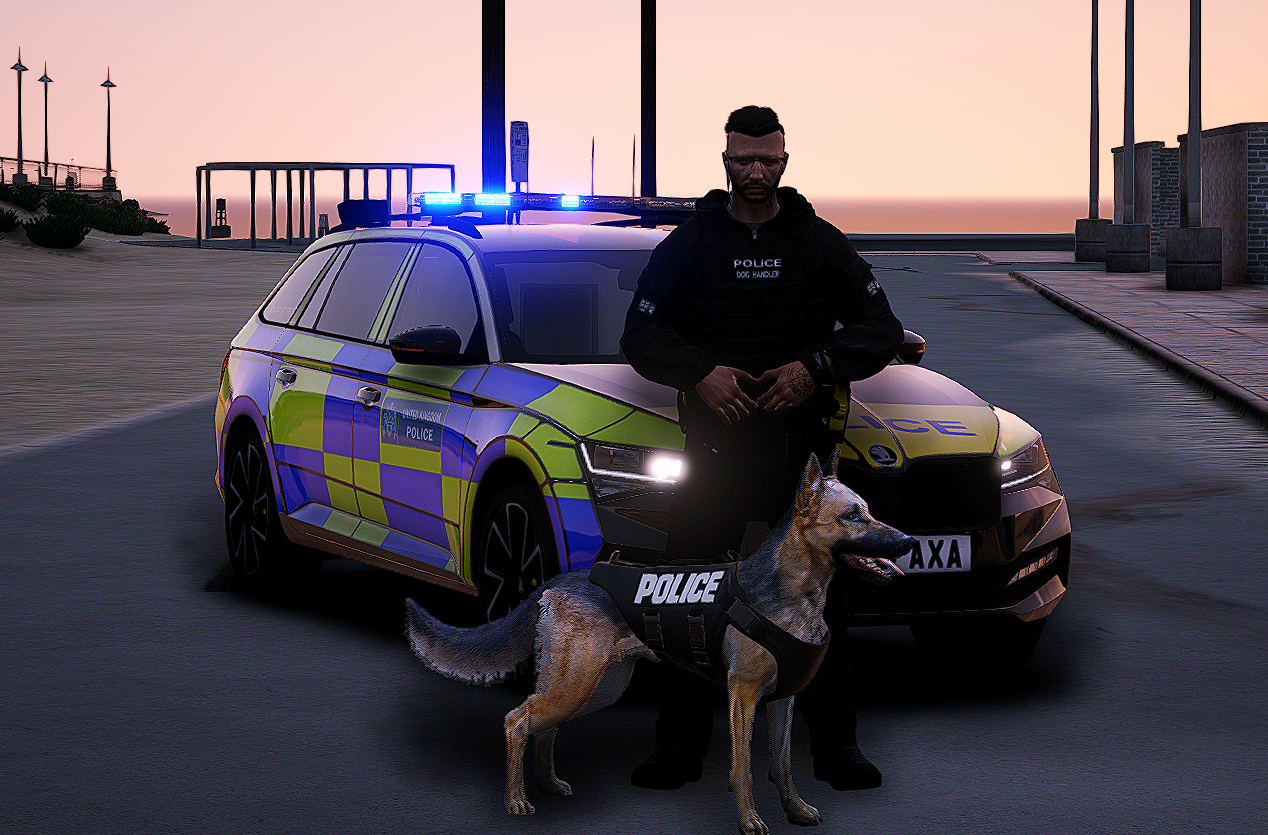
These specialist teams combine established police-dog skills with additional training for high-risk policing environments.
Police dogs can provide an effective search capability, helping officers locate people during appropriate policing operations.
Firearms Support Dog teams are trained to operate alongside authorised firearms officers when their specialist capability is required.
The abilities of trained police dogs can assist police when searching for individuals during incidents and operations.
The dog, handler and other officers must work together as a coordinated team.
Additional training prepares these teams to support police responses to particularly serious incidents.
As with other specialist police capabilities, protecting life and maintaining public safety are central considerations.
Police dog teams regularly train to maintain the standards required for their specialist role.
Handlers are responsible for controlling, caring for and working with their police dogs throughout their service.
Each operational partnership is built around a trained police dog and its handler.
Firearms Support Dogs receive training beyond their normal general-purpose police-dog role.
Teams can work alongside specialist officers and other policing resources.
Continued training helps teams maintain the standards expected of specialist police capabilities.
Effective police-dog work depends on a strong professional partnership between the dog and its handler. Handlers learn how their dogs respond to different situations and are responsible for directing and controlling them during policing activity. The relationship also extends beyond operational work. Appropriate care, exercise, training and welfare are important throughout a police dog's working life. This partnership allows the handler and dog to operate as one specialist policing resource.
Police dogs support policing in many different ways, from locating people and property to specialist searches and supporting high-risk operations. Learn more about the work of police dogs, their handlers and the care involved throughout their service.